
From hospital beds to home comfort
Posted on January 30, 2026
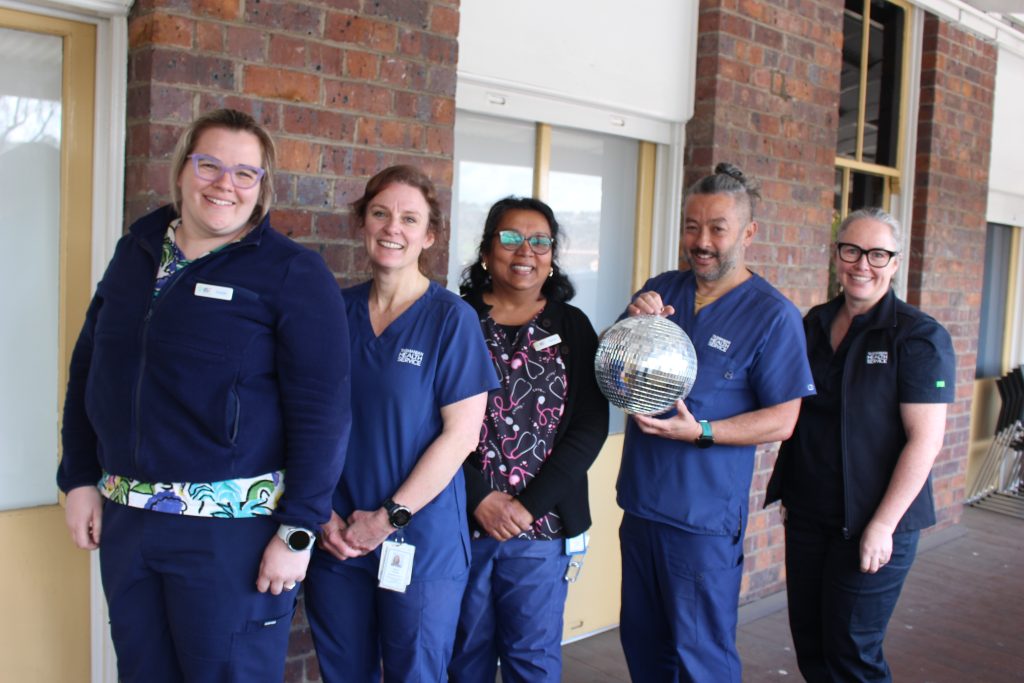
How a regional pilot has grown to keep people well and out of hospital across the state.
We’ve featured the Community Rapid Response Service (ComRRS) before in Primary Health Matters, but the story has grown—and so has its impact. What began as a small pilot in Launceston is now a statewide service, with teams in the north, south and north west. And for many Tasmanians, it’s the difference between a hospital bed and the comfort of home.
When someone becomes acutely unwell, the default response is often hospital admission. ComRRS was created by the Tasmanian Department of Health to change that story.
The service started in 2016 in Launceston with a simple idea: keep people safe and cared for in their own environment. Almost a decade later, that focus remains at the heart of the program, but the model has evolved.
In the south, ComRRS is now the community assessment arm of the Hospital@home service, opening the door to hospital-level care at home and entry into community inpatient programs. It’s a quiet revolution in how care is delivered. The service is also being delivered into homes in the north west of the state.
Naomi O’Shea, nurse practitioner with ComRRS–North, says: “We make a real difference in people’s lives by keeping them out of hospital—whether that’s in their nursing home or their own home.”
ComRRS is GP-referred and designed to be simple. When a GP identifies a patient who could benefit from hospital avoidance care, they call the team directly to discuss the situation, confirm suitability, and agree on a treatment plan. Patients are usually seen within four hours, and the team operates from 7:30am to 9:30pm, seven days a week. After the call, an eReferral or email can follow for documentation, but the priority is responsiveness.
Clinical nurse consultant with ComRRS–North Mandy Brown says: “It’s a responsive service. We turn up when we say we will, and that changes people’s experience of health care.”
And those experiences matter. “We get feedback from patients… and they say, ‘Actually, this is a positive experience for me’,” Naomi says.
For many, the alternative is hospital admission—and that can be daunting. “A lot of people have trauma from hospital admissions and will do anything to avoid going back,” Mandy says. “It’s nice for those people to access good quality care at home.”
Hospital stays can bring risks: falls, delirium, pressure injuries and infections. ComRRS helps prevent these by treating conditions like cellulitis, urinary tract infections and pneumonia in the patient’s home. The team can administer IV antibiotics, manage catheters and provide oxygen therapy when needed.
The service has also grown to include allied health support, strengthening its ability to keep people well at home. A physiotherapist and an occupational therapist now work alongside the ComRRS–North team. GPs can refer directly to them for hospital avoidance needs, or they may become involved as part of a broader ComRRS care plan if the team identifies a need. Their focus is on acute issues, particularly in aged care settings, rather than ongoing physiotherapy or occupational therapy.
Julie Smedley, Care Manager at the Tyler Village aged care home in Launceston, says the service is invaluable. “ComRRS promptly attends to residents requiring acute care interventions and ultimately prevents hospital transfers,” she says. “This is best for residents and families, and it reduces stress for aged care staff.”
Dr Caroline Stewart, a GP at the Family Doctor Service in Kings Meadows, agrees. “The service has been exceptional and has kept a large number of my patients out of the extremely busy emergency department,” she says.
Relationships are at the heart of ComRRS’s success. The team works closely with GPs, aged care facilities and ambulance secondary triage to provide alternatives to hospital transfer. “We’re often the eyes and ears on the ground for GPs,” Mandy says. “They don’t have the capacity to see everybody, so they trust our assessments.”
That trust has been earned. When the service launched in the north, nurse practitioner Meredith Prestwood spent time visiting practices and building rapport. Those early connections paid off. Today, referrals are streamlined and communication is personal, happening mostly over the phone.
The team’s broad experience helps too. Many come from intensive care or emergency backgrounds, bringing acute care skills into the community. Others have worked in general practice, creating strong links across the health system.
“It’s a wonderful team,” Naomi says. “We’re very small, and we’re very tight, and it’s just a very rewarding job because we do seem to make a bit of a change in people’s lives and keep them out of hospital.”
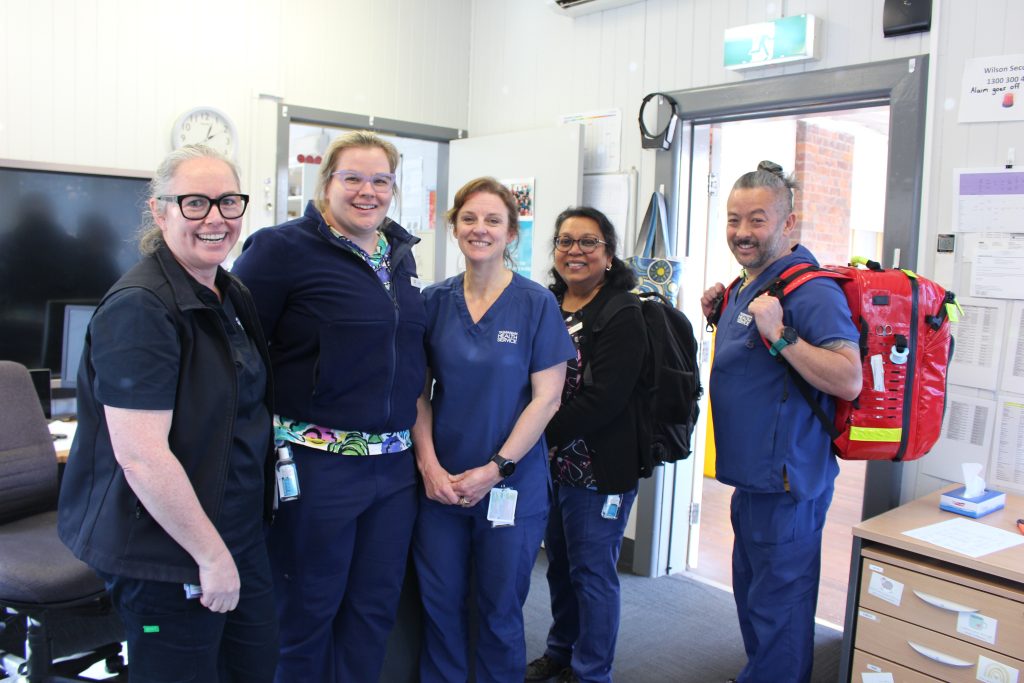
The work is varied. Some patients need a single visit for a catheter issue or iron infusion. Others require daily care for a week or more. “People consider us part of their family because we’re in their homes every day for a week or more,” Mandy says. “You see the whole journey—from really unwell to getting better.”
Sometimes, the role is about reassurance. “Half the time, patients just need someone to answer their questions and ease their anxiety,” Naomi says. “We can do that because we know what’s on the other end of a hospital admission.”
“We’ve had examples where someone didn’t want to go to hospital, but really needed to. We were able to explain the risks and benefits and support them through that decision,” Mandy says.
Looking ahead, the team hopes to expand by supporting more nurses to become nurse practitioners and raising awareness among new GPs. “Sometimes we feel like the secret service because people say, ‘I’ve never heard of you!’ We want every GP to know how easy it is to refer—just pick up the phone,” Mandy says.
When a GP identifies a patient who could benefit from hospital avoidance care, they call the ComRRS team directly to discuss the situation, confirm suitability, and agree on a treatment plan. That phone call is often the start of a collaborative approach that keeps patients safe at home. “It’s only a phone call,” Mandy says. “If we get a referral out of it, that’s a win. If we’ve just had a conversation and someone’s avoided hospital, that’s a win too.”
The southern team’s integration with Hospital@home shows what’s possible. By linking rapid response with community inpatient care, Tasmania is creating a more flexible, patient-centred system.
Learn more about ComRRS here.
This story features in Issue 21 of our Primary Health Matters magazine. Click here to read the rest of the issue.