
Tasmanian lived experience framework goes global
Posted on January 29, 2026
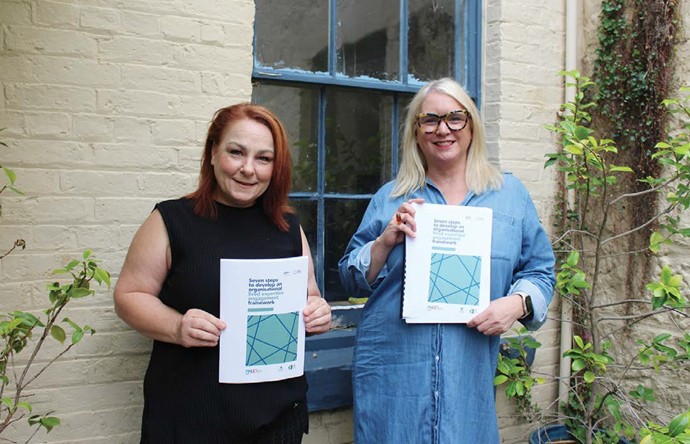
How one framework focused on lived expertise is making waves across the world.
When writing the Seven steps to develop an organisational lived expertise engagement framework, Mental Health Lived Experience Tasmania chief executive officer Tash Smyth and her team had Tasmanians firmly in mind.
So, it came as a complete surprise that this framework would inspire colleagues on the other side of the world, working for the National Health Service (NHS) in the United Kingdom.
Listening to and consulting with people who have lived experience helps organisations design programs and services that make a meaningful difference in people’s lives.
People who have experienced the health conditions or circumstances organisations and health systems aim to address are often best placed to know what will work for them. Placing people at the heart of service design helps create lasting improvements in health outcomes—and, ultimately, in people’s lives.
To support this, in early 2024, Primary Health Tasmania engaged Mental Health Lived Experience Tasmania (MHLET) to develop a practical framework for use by Tasmanian health, community service and primary care organisations.
MHLET worked with Health Consumers Tasmania and Mental Health Families and Friends Tasmania to co-design the resource, and it was co-produced by people with lived expertise from diverse backgrounds.
The result is Seven steps to develop an organisational lived expertise engagement framework—a tool designed to help organisations understand, establish and strengthen their approach to engaging with lived experience.
The framework has three aims:
- to increase understanding of structured engagement with lived expertise
- to help organisations assess their current practices and develop their own lived experience engagement framework
- to provide a consistent set of principles to inform engagement with lived expertise in Tasmania.
Tash says the framework is designed to be flexible and adaptable for organisations of any size.
“It’s about fostering genuine collaboration and working respectfully alongside people with lived experience,” Tash says.
“The framework can be scaled to fit an organisation’s capacity, but what matters most is the commitment to partnership.”
That commitment has now reached well beyond Tasmania.
Earlier this year, the framework caught the attention of the United Kingdom’s NHS.
“We were surprised and delighted to receive an email from Liam. It was pretty gratifying to see our work had found its way all the way to the UK, despite being written for the Tasmanian context,” Tash says.
Liam Corbally, Head of Co-Creation at Tees, Esk and Wear Valleys NHS Foundation Trust, contacted MHLET after discovering the resource.
“We have recently come across your paper and loved it on a number of different levels,” Liam wrote in his first message.
“Chris (Morton) and I, along with a range of service users, have been developing our own co-creation framework. It isn’t quite there yet, but we’d love to share reflections and set up a call to understand more of your work and how we might link in.”
Thanks to the power of technology and flexibility around timeframes, a meeting between the Tasmanian and British teams allowed for the free flow of ideas.
Liam, who draws on his own lived experience in his role, later described the meeting as deeply thought provoking.
“(The meeting) hugely got me thinking about the way we go about what we do,” he wrote.
Tash says the connection shows that Tasmania’s work in lived experience engagement is resonating internationally.
“This recognition highlights the universal value of lived experience—and demonstrates Tasmania’s contribution to an important global conversation.”
The value of engaging people with lived experience in designing and reviewing healthcare services is increasingly recognised as essential to developing person-centred care that is effective, appropriate, accessible and safe.
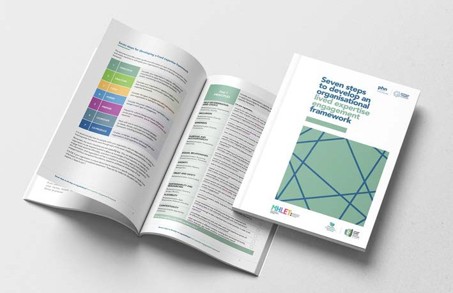
What’s in the Seven steps framework?
A practical guide to help health, community and primary care organisations engage meaningfully with people who have lived experience.
The Seven steps
- Principles – establish guiding principles for respectful engagement.
- Enactors – identify the people and roles that will enable engagement.
- Types – define the types of engagement your organisation will use.
- Power – consider power dynamics and share decision making.
- Prepare – get your organisation ready for meaningful engagement.
- Co-initiate – begin engagement collaboratively with lived expertise.
- Co-produce – work together to design and deliver services or frameworks.
Learn more about the Seven steps framework here.
This story features in Issue 21 of our Primary Health Matters magazine. Click here to read the rest of the issue.